



Quick Answer
Signs you need a filling or crown often include sensitivity to temperature or sweets, discomfort when biting, visible changes in a tooth, or a feeling that something isn’t quite right when you chew. These symptoms usually point to decay or structural weakening. Early-stage damage can often be treated with a filling. More advanced damage may require a crown to restore strength and protect what remains.
Most people don’t notice when a tooth first starts to change.
It tends to show up gradually. A cold drink lingers longer than expected. A certain spot feels different when you bite down. You may even see a darker area or a slight change in shape and assume it’s always been there. Because the shift is subtle, it’s easy to ignore.
Teeth, however, don’t change without a cause.
What’s Actually Happening Inside the Tooth
Tooth damage doesn’t appear all at once. It develops in stages, and those stages matter.
In the case of decay, bacteria produce acids that begin to weaken enamel. At first, this process is microscopic. There is no pain, no visible hole, and no clear sign that anything is wrong. Over time, the enamel loses mineral density. Once the damage reaches dentin, the inner layer, the progression becomes more active because dentin is softer and more porous.
Structural damage follows a different path. Repeated force from chewing, grinding, or clenching can create small fractures within the tooth. These are not always visible. They change how pressure moves through the tooth, concentrating stress in specific areas.
At some point, the tooth begins to respond.
How Those Changes Turn Into Symptoms
The first signs are often inconsistent, which is part of what makes them easy to dismiss.
As the condition progresses, the response becomes more mechanical. Pressure begins to matter. Biting into something firm may cause discomfort, or releasing pressure may trigger a brief, sharp sensation. These symptoms often point to deeper involvement, where the tooth structure is no longer distributing force evenly.
Not every damaged tooth hurts. In many cases, the absence of pain is what delays treatment.
Where a Filling Works
When damage remains localized, treatment stays relatively simple.
A filling removes the affected portion of the tooth and restores the missing structure with a bonded material. Because the surrounding tooth is still strong, it can support normal chewing forces without additional reinforcement. The goal is to intervene early enough that the overall structure remains intact.
This is why early symptoms matter. A small area of decay or minor structural change can often be addressed without altering the rest of the tooth.
When a Crown Becomes Necessary
Once a tooth loses enough structural integrity, the approach changes.
This isn’t just about the size of the problem. It’s about how much healthy tooth remains and whether it can withstand daily function. A tooth with a large area of decay, a fracture, or a failing restoration may no longer be stable under normal pressure.
In these situations, placing another filling can create a weak point. The remaining tooth structure may flex or crack, leading to further breakdown.
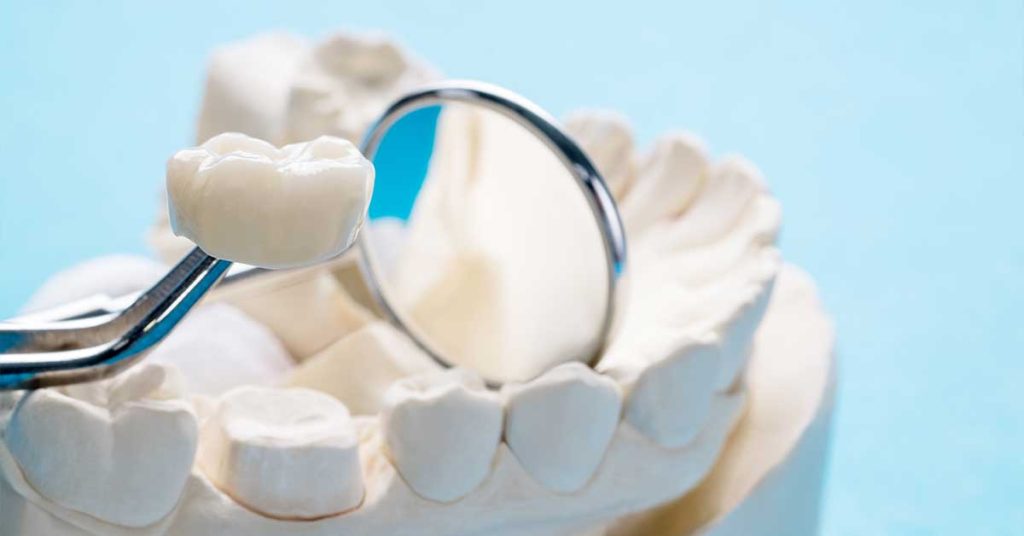
A crown changes how force is handled. By covering the entire visible portion of the tooth, it redistributes pressure and protects what remains. Instead of repairing one area, the entire structure is reinforced.
Existing Dental Work Changes the Equation
Many patients assume that once a tooth has been treated, the issue is resolved permanently.
In reality, restorations age. Fillings can wear, margins can break down, and small gaps can develop where bacteria can re-enter. When new decay forms beneath an existing filling, the remaining tooth is often more compromised than before.
At that point, the decision isn’t just about removing decay. It’s about determining whether the tooth still has enough strength to function predictably. In some cases, replacing a filling with another filling is no longer the most stable option.
Why Timing Matters More Than Symptoms
Two patients can describe similar symptoms and require very different treatment.
The difference is usually how long the condition has been developing. Early-stage issues allow for conservative repair. Later-stage damage requires more comprehensive support.
Teeth don’t stop deteriorating once decay or structural failure begins. The process may slow, but it doesn’t reverse without intervention.
This is where timing becomes the deciding factor.
Common Questions About Fillings and Crowns
Do I always need a crown if a tooth hurts when I bite?
Not always, but biting pain often suggests the tooth is under stress or has a crack. If the structure is compromised, a crown is often the more reliable option because it protects the tooth from further fracture.
Can a cavity turn into needing a crown?
Yes. If decay isn’t treated early, it can spread and weaken a larger portion of the tooth. At that point, a filling may not be enough to support the remaining structure.
How long do fillings and crowns last?
Fillings can last several years depending on size, location, and wear. Crowns typically last longer because they protect the entire tooth, but both require regular evaluation to ensure they remain intact.
Is it better to treat a tooth early even if it doesn’t hurt?
Yes. Early treatment usually means less removal of tooth structure and simpler procedures. Waiting often leads to more involved treatment and a higher risk of complications.
Don’t Wait for the Treatment to Become More Involved
If you’re noticing signs you may need a filling or crown, the next step is understanding what is happening beneath the surface.
Elite Smiles provides detailed evaluations that go beyond symptoms and identify the condition of the tooth as a whole. Patients in Knoxville and nearby areas, including Powell, Farragut, and Maryville, rely on this approach to avoid more complex treatment later.
If something feels different, it’s usually worth having it evaluated. Call Elite Smiles at (865) 637-5708 to schedule a visit and get a clearer picture of your options.